


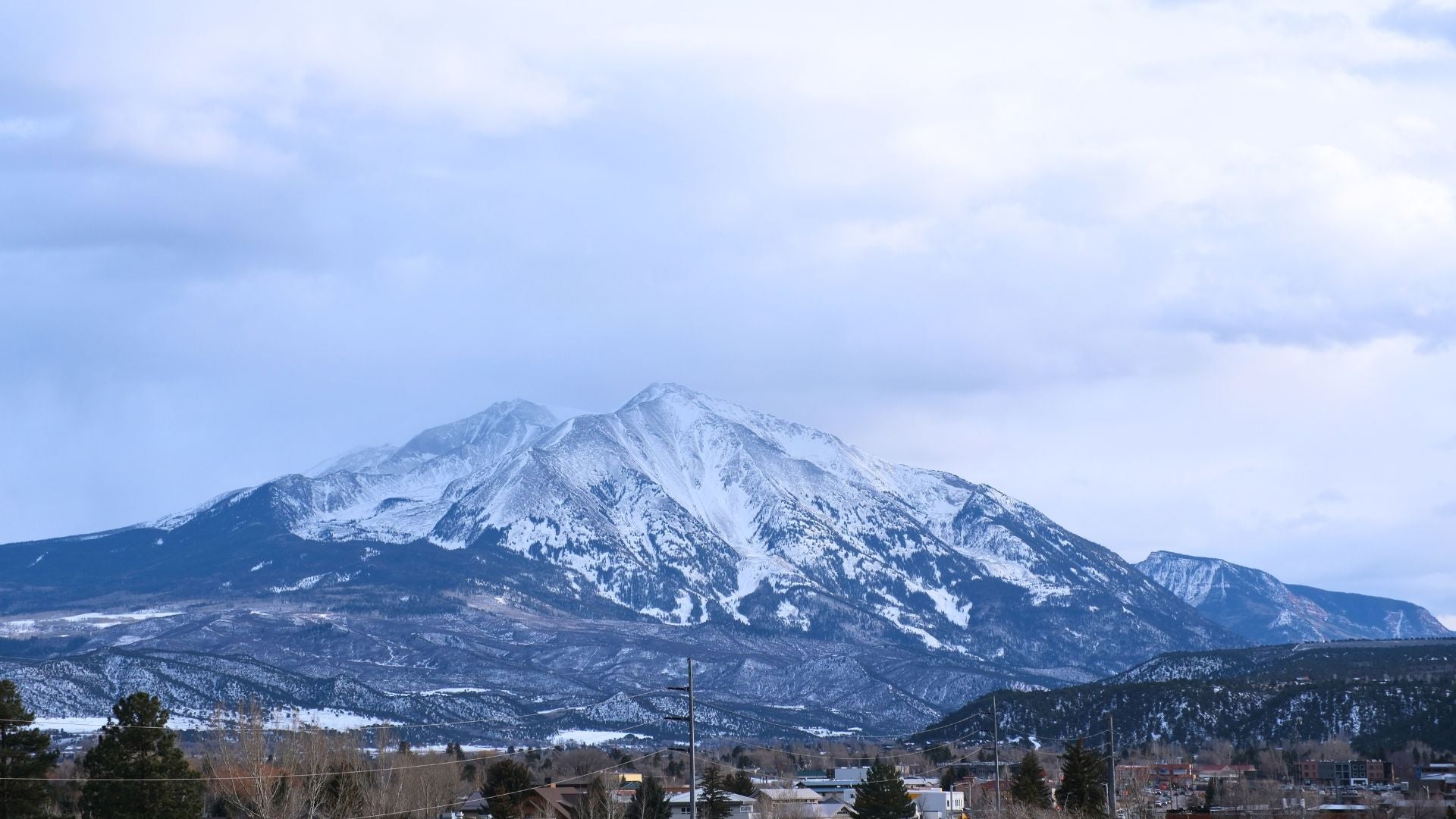
The West Isn't Dead: 4 Resorts to Bet On This March
It's the harsh truth and we've all been impacted by it.
There just hasn't been any snow in the Western United States.
Known powder hubs are getting outpaced by hills on the East Coast. Alta has less snow than Stratton. Winter Park has less snow than Loon.
No shade to the resorts I grew up on, but let's call a spade a spade: the math isn't mathing.
Those who were fortunate enough to book their trips for the week of February 14th–21st (yes a single week) or so did get lucky with some big storms, but since then it's been back to 45 degrees and not snowy.
But all hope is not lost. In fact, I'd argue we still have plenty of time to find our powder days (or at least avoid thin crust on basic groomers).
March is coming.
And March is historically a very strong month out West. With a little bit of diligence, you may find yourself skiing in waist-deep snow, forgetting entirely about the grass-filled days of January.
Lucky for you, I've done this diligence for you. Using weather data, historical trends, upcoming forecasts, and a bit of intuition, I've compiled a list of 4 resorts that have already seen some serious recovery and will continue to as we head into the final third of the season.
1. Mt. Baker, WA

The northernmost resort on this list and arguably the most compelling. Baker sits directly in the path of the March storm track that NOAA is favoring for the Pacific Northwest. We're talking 20–28 inches in the 10-day forecast as of late February, with snow-to-liquid ratios improving midweek as colder air rolls in. This place averages 650 inches of snowfall per year in a normal season. It's built for this kind of late-season resurgence.
It's not on Ikon or Epic, so buy tickets direct. But it's one of the most affordable destination ski experiences in the West, and flying into Bellingham gets you there in 30 minutes. If you're coming from Seattle, it's a 2.5-hour drive that's absolutely worth it when the storms are firing.
2. Palisades Tahoe, CA

The (only) redemption arc of the season.
Palisades went from 60% of average snowpack on February 15th to 104% of median by February 20th. That's not a typo. A single storm cycle dropped 9.6 feet — over 115 inches — in 4 days in mid-February. The base is established, the season runs through late May, and OpenSnow is signaling a continued wet pattern for Tahoe into March.
Yes, the Sierra outlook is more hit-or-miss than the PNW — NOAA is projecting intermittent storm cycles rather than a steady parade, and temps could occasionally raise snow levels. But with the deep base they now have, even a mediocre March storm keeps conditions dialed. And Sierra snowpack historically peaks in April, so there's more to come.
Fly into Reno (45 min) or Sacramento (2 hrs). Ikon Pass covers you. Midweek 4-Pack deals are running at $109/day. Do it.
3. Stevens Pass & Crystal Mountain, WA

Same favorable PNW storm track as Baker, just far more accessible from Seattle.
Stevens is catching 17–23 inches in the 10-day forecast. Crystal is looking at 13–19 inches and is the largest ski area in Washington — real vertical, real terrain variety, real destination energy. Snow levels are trending lower midweek (down to 2,000–2,500 ft), which means improving quality, not just quantity.
Both are on Ikon Pass. Stevens is a 2-hour drive from Seattle; Crystal is 1.5 hours. Daytripper friendly if you're already in the city. Washington statewide snowpack is sitting at just 56% of normal — there is enormous room for late-season recovery, and the forecasts suggest it's already happening.
4. Big Sky & Bridger Bowl, MT

While everyone is fixated on Colorado and Utah — which, per NOAA's March outlook, are leaning warmer and drier — Montana is quietly sitting in the second-most favored region for above-normal precipitation behind only the PNW.
Big Sky has 5,800+ acres. The crowds are lighter in March than during the holiday rush. Northern Montana is expected to see slightly cooler-than-average temps, which means better snow quality than what you'd find further south in the Rockies.
And then there's Bridger Bowl — a community-owned nonprofit resort just 20 minutes north of Bozeman, with steep expert-friendly terrain at a fraction of the price of Big Sky. If you're flying into BZN (which has direct flights from most major hubs), you can legitimately ski both in the same trip.
Big Sky is on Ikon. Bridger Bowl is independent — buy direct and save.
BTW: Gavin and I will both be in Big Sky March 20th through the 25th. Hit us up if you're around.
Granted, none of this matters if you're willing and able to just go to Japan. I mean, the snow over there is ridiculous. I don't get it. I don't think it's stopped snowing since December. And it's not flurries — it's like a foot a night.

Okay, I digress...
The 2025–2026 season is far from over, and I'm confident we have some serious snow days to go. After all, if Boston just got hit with 2 feet, why can't Colorado "suffer" the same fate?
Maybe if we stop praying for snow and pray for bluebird days, it'll change things.
Just a thought.
Anyways.
Start booking those mid-March trips. Be bold. Bet on the snow.
After all, fortune favors the bold. And the bold deserve powder.
See you on the slopes.
—Shai
Leave a comment
This site is protected by hCaptcha and the hCaptcha Privacy Policy and Terms of Service apply.