

Salvage 2026: Skiing in the Southern Hemisphere
At this point, it's a simple truth.
Snowfall has been lackluster to say the least.
Even with a strong surge in the PNW (called it btw), the majority of the Rockies are limping to the finish line of what has been the lowest snowfall ski season since 1980.
Now, I firmly believe that all skiing is fun. Even those days on icy slopes provide us with the good times.
But let's be honest. When we book those trips out to Utah we expect some snow.
So as March turns to April — we are faced with a choice.
Do we pack it up and turn our attention to late November? Or do we get creative and begin our exploration of the Southern Hemisphere.
In a few weeks, the Southern part of Earth will make its descent into Winter and it is up to us to take advantage of our second chance at deep turns and powder days.
Now to some, going skiing that far from home may be daunting.
Well, I'm here to debunk that myth. In fact, it's likely not all that much more difficult than your trip to Whistler or even Colorado (some of those more remote mountains can be a pain).
In fact, I'm taking things a step further.
Below are three resorts that are either on one of the major passes, accessible via a relatively straightforward flight, and poised to have a top notch Summer (well, Winter).
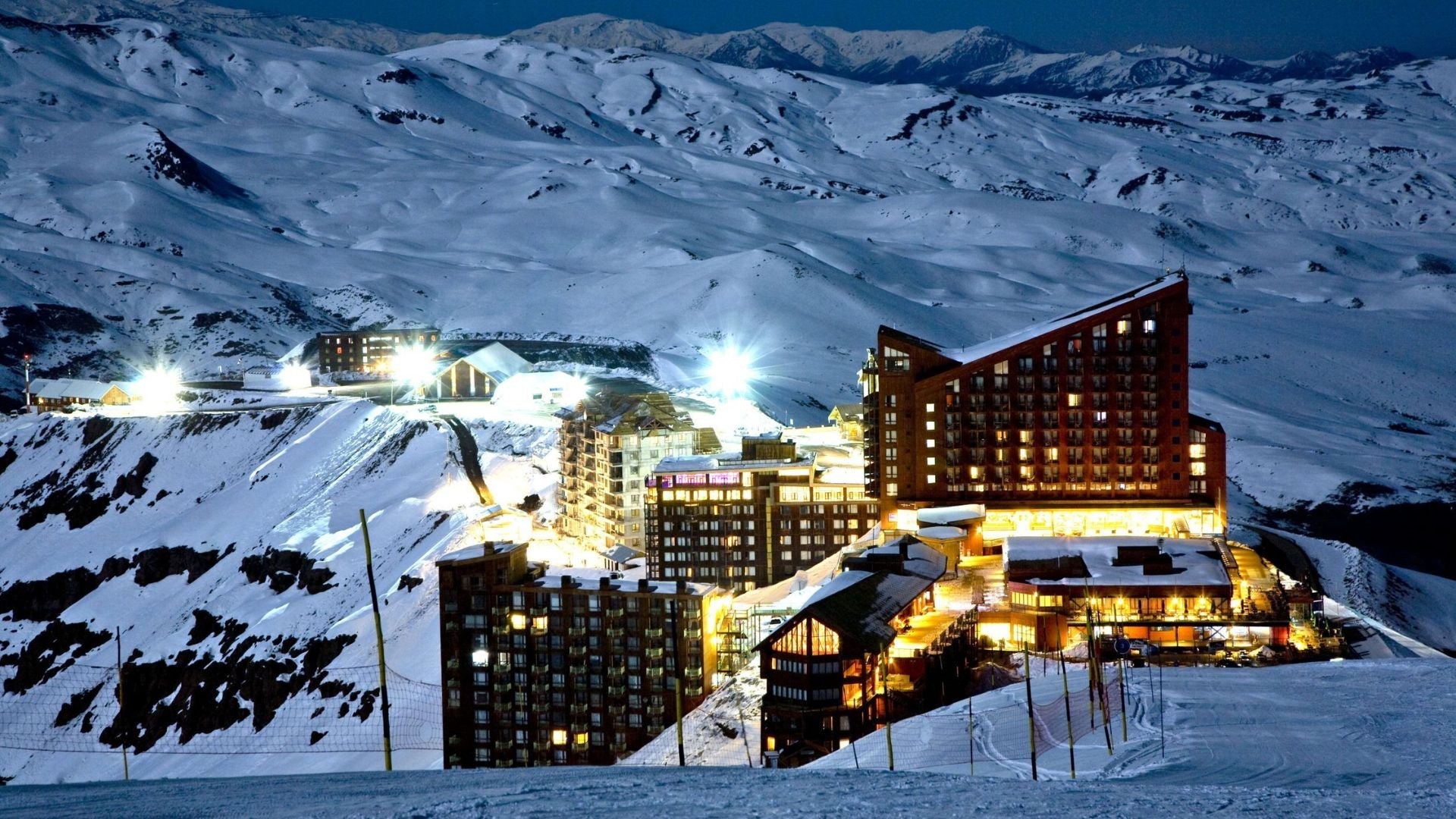
1. Valle Nevado, Chile

This is the one I'd start with if you've never skied the Southern Hemisphere.
Valle Nevado is about 90 minutes from Santiago. Santiago. As in the capital of Chile, a major international city with direct flights from Miami, Dallas, Atlanta, New York, and Houston. The flight from the East Coast is 8-10 hours.
That's roughly the same as flying to London. Except instead of dealing with the Tube, you're winding up into the Andes with a coffee in your hand and a chairlift waiting at the other end.
The resort itself sits at around 10,000 feet in the central Andes. Almost everything is above treeline, which means the terrain is wide open — big bowls, steep chutes, and views that make you feel very small in the best possible way. The snow is dry at that altitude. Not Utah dry, but dry enough that when a storm rolls in you're going to have a very, very good day.
Valle Nevado is the largest ski area in South America when you factor in its connections to the neighboring resorts La Parva and El Colorado. Between the three, you've got a combined ski area that's genuinely massive.
There's heli-skiing available too, if you're the type. The resort has multiple hotels right at the base, a modern lift system, and all the infrastructure you'd expect from a proper destination.
Here's the kicker. Valle Nevado is on the Ikon Pass. Full Ikon holders get 7 days. Base Pass holders get 5. That's a legitimate vacation's worth of skiing that you've already paid for.
Getting there: Fly into Santiago (SCL). Direct flights from multiple US cities. From the airport, it's about 90 minutes to the resort by road — transfer services are easy to arrange. If you want to extend the trip, Santiago itself is a fantastic city. Great wine, great food, great nightlife. Tack on a day or two before or after and you've got a full trip.
2. Cerro Catedral — Bariloche, Argentina
If Valle Nevado is the practical choice, Cerro Catedral is the one you'll tell stories about.
Let's start with the numbers.

3,000 acres of skiable terrain. Largest lift-accessed ski area in South America. 58 runs. 26 lifts. Half the mountain is off-piste — and I don't mean "there's a gate that leads to some tracked-out trees." I mean legitimate backcountry chutes and bowls accessed directly from the La Laguna chairlift, above the timberline, with the kind of terrain that would make a Colorado local pause and take a photo before dropping in.
Now I should be upfront — Cerro Catedral is not on the Ikon or Epic Pass. But before you scroll past, hear me out. Lift tickets run between $52 and $130 a day depending on the time of season. That's less than a single day at most US resorts.
Way less.
Argentina's exchange rate is extremely favorable for Americans right now, which means your dollar stretches in a way that it absolutely does not at Park City.
But the real reason Catedral makes this list is Bariloche.
Cerro Catedral is one of the only ski resorts in South America with a true base village.
Slopeside hotels, restaurants, bars, shops.
But eight miles down the road sits San Carlos de Bariloche, a city of about 100,000 people with Swiss-influenced architecture, a lakefront on the stunning Lake Nahuel Huapi, and — I kid you not — a reputation as the chocolate capital of Argentina. There are chocolate shops everywhere.
There's a casino. There are discos. There is nightlife that would make Aspen blush. This is not a resort town. This is a real city that happens to sit next to a world-class mountain.
And it has its own airport. Direct flights from Buenos Aires take about two hours. Buenos Aires has direct service from Miami, Houston, Dallas, New York, and Atlanta. So your routing looks like: your city → Buenos Aires → Bariloche → 15 minutes to the mountain. That's two flights and a short taxi.
I've had more complicated travel days getting to Telluride.
Is it on a pass? No. Does it matter when a lift ticket costs what you'd spend on lunch at Deer Valley?
Also no.
Getting there: Fly into Buenos Aires (EZE), connect to Bariloche (BRC) — 2 hour domestic flight. Airport to resort is 15-20 minutes. Stay at the base village for ski-in/ski-out, or in Bariloche for the full city experience and more lodging options. Rental car is useful for exploring the lake district, but not required for skiing.
3. The Remarkables — Queenstown, New Zealand
Okay. This one requires a longer flight. I won't pretend otherwise. But if you're going to commit to crossing an ocean, The Remarkables and Queenstown might be the single best ski trip you can plan — and a significant amount of that has nothing to do with the skiing.
Let me explain.
The Remarkables is a great mountain. 385 hectares, 468 meters of vertical, a mix of terrain from learner slopes to serious freeride chutes. It's home to the only Burton Stash in the Southern Hemisphere (one of six in the world). The vibe is distinctly Kiwi: laid back, welcoming, zero pretension. There's an Ice Bar at the base. The snowmaking is reportedly the best in the Southern Hemisphere. It's a genuinely fun place to ski.
But the reason you go to The Remarkables is Queenstown.

Queenstown is 45 minutes from the resort and it is, without exaggeration, one of the most stunning and entertaining small towns on Earth.
This is the place where commercial bungee jumping was invented. AJ Hackett, Kawarau Bridge, the whole thing. You can jet boat through the Shotover River. You can paraglide. You can take a gondola up to Skyline for luge runs and panoramic views over Lake Wakatipu. You can eat at Fergburger, which has a permanent line and is permanently worth it. Canyon Brewing and Altitude Brewing are both worth your time, and Central Otago, the wine region nearby, produces some of the best Pinot Noir in the world.
If you read my piece on convincing non-skiers to join a ski trip, Queenstown is essentially the ultimate version of that concept. The skiers go to The Remarkables or Coronet Peak (20 minutes from town, has night skiing on Wednesdays and Fridays). Everyone else has more than enough to do.
And at dinner, the non-skiers' stories might actually be better than yours.
Let me translate: you can go skiing while also appeasing the non-skiers in your life all in one go. Don't even tell them it's a ski trip. Just quietly pack your gear.
The Remarkables is on the Ikon Pass. Full Ikon gets you 7 days across the New Zealand resorts, which also includes Coronet Peak and Mt Hutt. That's three mountains on one pass. The season runs June through early October with July and August being peak.
You're looking at 15-20 hours of total travel time and connecting through Auckland or Sydney. But Queenstown's airport is tiny and efficient: you land and you're in town in minutes. The Ski Bus runs from downtown to The Remarkables for about $15 NZD round trip.
No rental car needed.
And lucky for you, you probably have just the boot bag designed for a trip like this ;).
Getting there: Fly into Queenstown (ZQN) via Auckland or Sydney. Direct flights from those hubs are 1-2 hours. From the US, the full journey is a day of travel, but the payoff is a destination that delivers on every level, not just the skiing.
Stay in Queenstown, ride the bus up, ski all day, come back to one of the best small towns you'll ever visit.
The heart of the Southern ski season is July and August, with the overall season stretching as long as June through October.
Of course, these destinations require flights with connections for the most part. And those certainly can cause angst.
But if only you knew a brand that made a boot bag designed for getting you to the furthest destination imaginable...
And if only that bag was finally restocking. Just in time for skiing in South America and Australia.
Anyways you get the point.
The bottom line is this.
The 2025 - 2026 season was lackluster in the United States. But that doesn't mean 2026 is a wash.
Resorts all over the Southern half of the globe are opening up and they're not that hard to get to.
Skip the July heat and find some fresh track.
-Shai

,%20the%20majority%20of%20the%20Rockies%20are%20limping%20to%20the%20finish%20line%20of...)
1 comment
Great article with lots of important points. I hope to ski Southern hemisphere this year. My Brasilian friends that are regular skiers in Argentina and Chile warn me about the unpredictable conditions at Portillo because of the proximity to water Causing “Sierra Cement” They recommend Valle Nevado more highly for having better conditions more often
Jack Hunt
Leave a comment
This site is protected by hCaptcha and the hCaptcha Privacy Policy and Terms of Service apply.